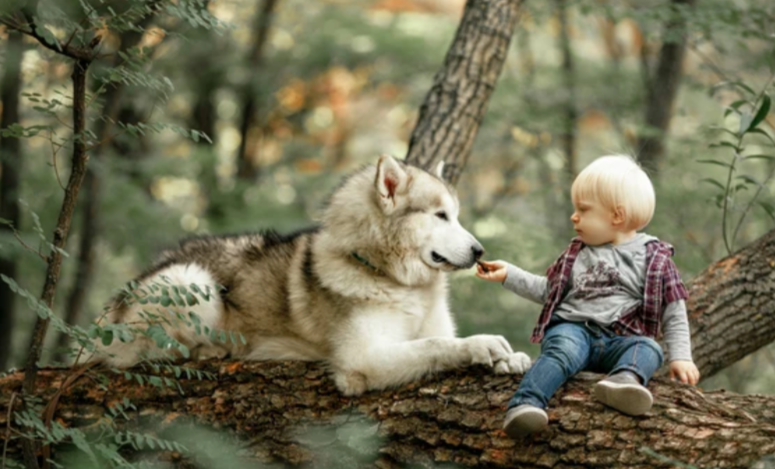
Why a generation raised on talking animals keeps getting too close to the real ones.
Submitted by Kara Jensen
Every summer the same footage circulates: a tourist edging toward a bison for a selfie, a family posing next to an elk in rut, a hiker holding out a hand to a bear “just eating grass” fifty feet away. The comment sections always say some version of the same thing — how could anyone be this foolish? I don’t think it’s foolishness. I think it’s a lesson these folks were taught, starting around age four, and never unlearned. I call it the Disneyfication of Wildlife, and it turns out I’m not the only one who’s noticed.
Fables Taught a Lesson. Modern Movies Teach a Relationship.
Go back and actually watch the classics, and you’ll notice something: the animal was almost never the point. Aesop’s wolves and foxes, the Big Bad Wolf, even early Disney — these were morality plays wearing fur. The animal stood in for a human vice or a human danger, the way a chess piece stands in for a knight. Nobody watching “The Three Little Pigs” walked away thinking they understood wolf behavior. They walked away thinking about diligence and consequences. Even Bambi, for all its sentimentality, kept its distance — the deer never spoke English, never had a house, never treated the hunter as anything but an existential threat called simply “Man.”
Modern children’s media does something categorically different. It doesn’t use the animal as a symbol — it turns the animal into a character we’re meant to identify with, root for, and love as a friend. Zootopia’s predators are safe roommates. Kung Fu Panda’s tiger is a teammate. Alpha and Omega’s wolves fall in love like teenagers. Academic reviews of children’s programming have found that nearly all central animal characters in this media walk, talk, dress, and behave like people, often placed in unrealistic mixed predator-prey social groups that erase the actual relationship between those species. That’s not a moral lesson borrowing an animal’s shape anymore. That’s a friendship, and kids are being asked to believe it’s real.
The Bambi Effect Has a Name — and a Body Count
This isn’t just my pet theory. Researchers actually have a term for it: the “Bambi effect,” describing how fondness generated by anthropomorphized, cute portrayals of animals shapes public attitudes — and public behavior — toward the real thing. One study on children’s storybooks put it plainly: a conceptualization of wild animals as human-like leads directly to an expectation of friendly behavior, and researchers specifically point to the cute, sweet, lovable “Bambi” portrayal of deer and forest animals as a cause of rising visitor injuries at parks, where people approach wildlife expecting the same warmth they saw on screen. A 2023 review in the journal Society & Animals reached a similar conclusion, warning that anthropomorphic depictions of wild animals distort the public’s basic understanding of what normal wild behavior even looks like.
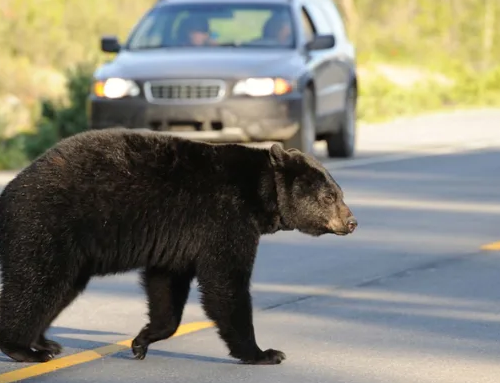
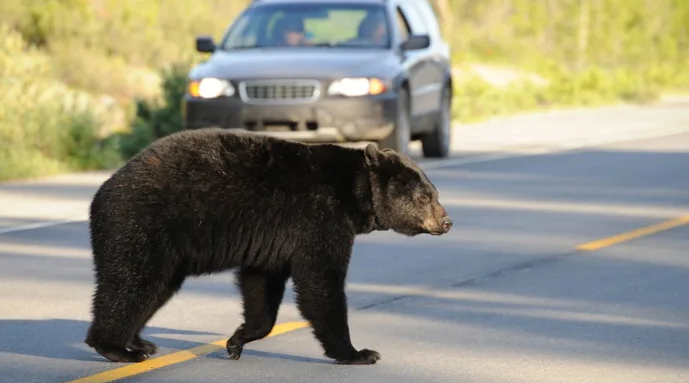
And it isn’t abstract. This year alone, a crowd of Yellowstone bison-gawkers watched as a visitor was tossed eight feet into the air and suffered multiple broken bones after a bull bison charged him at a campground. A filmmaker and his family were charged by a cow elk near a Grand Canyon visitor center after stopping to film it. A Colorado dog-walker was kicked repeatedly by a cow moose defending her yearling, sustaining serious chest and arm injuries. A grizzly bit a man who ignored a hundred-yard closure around a bison carcass because he “was just trying” to get closer, in the words of a park biologist who watched it happen. Here in Arizona a man frequently fed a bear. Then one morning while enjoying a cup of coffee this bear attacked when the man had no food to offer. None of these animals were being cruel or villainous. They were being exactly what they are — wild, unpredictable, and indifferent to the emotional script we’ve written for them since childhood.
The Wolf Rebrand: Same Playbook, Opposite Direction
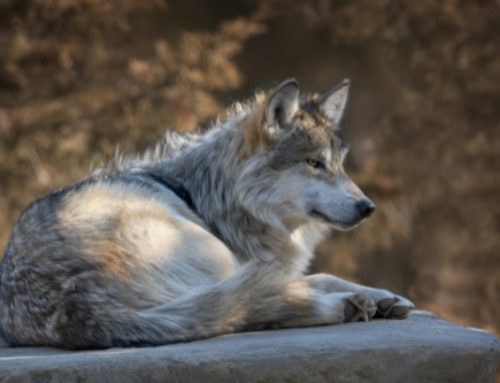
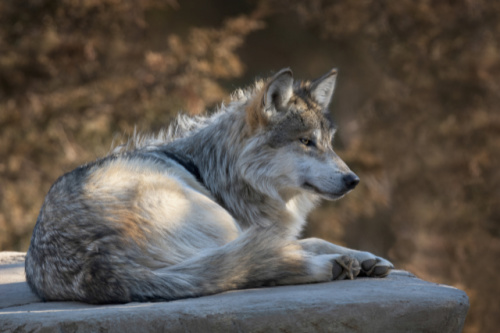
Here’s where it gets interesting for those of us who work in wildlife policy: the same anthropomorphic instinct is now being used on purpose, in the opposite direction, on one of the animals fairy tales vilified most. A number of self-proclaimed conservation and advocacy organizations have spent the last several years explicitly campaigning to “debunk the myth of the big bad wolf,” arguing the fairy-tale villain has unfairly driven policy and public fear for a century. Some of that pushback is fair — wolves genuinely are shy around people and rarely responsible for the carnage folklore assigns them. But some of the same campaigns go further, asserting flatly that wolves avoid humans and pose no danger, that they have faily units that behave as human-families. They are pushing a keystone-species narrative meant to generate the same emotional fondness Bambi generated for deer, just aimed at a predator instead of prey.
I’d argue that’s the same mechanism, just running in reverse. The 1940s gave us a cartoon deer so lovable that grown adults now walk up to real ones expecting a Disney moment. Today’s wolf advocacy risks manufacturing the same expectation for an apex predator — trading the myth of a mindless monster for the myth of a misunderstood friend, when the honest, unglamorous truth sits in between: wolves aren’t villains, but they aren’t golden retrievers either. They’re wild animals doing wild-animal things, and every species on that spectrum, prey or predator, deserves to be understood on those terms rather than whichever fictional terms are currently in fashion.
Respect the Wild, Don’t Rebrand It
The goal isn’t to bring back the Big Bad Wolf, and it isn’t to make Bambi the villain either. It’s to notice that both the century-old fear-mongering and the newer feel-good rebranding are doing the same thing to the public’s head: replacing a wild animal with a character. Real wildlife conservation — the kind that keeps animals wild and people safe — depends on the public understanding animals as they actually are: capable of coexistence, deserving of habitat and respect, and completely uninterested in playing the role we’ve written for them. Distance isn’t disrespect. It’s the only honest response to an animal that never signed up to be anyone’s Disney character in the first place.
Sources
– “Bambi effect” — Wikipedia.
– “The friendly fossa: The effect of anthropomorphic language on learning about unfamiliar animals” — ScienceDirect, Journal of Experimental Child Psychology, 2020.
– “Anthropomorphized Nonhuman Animals in Mass Media and Their Influence on Human Attitudes Toward Wildlife” — Society & Animals, Vol. 31, Issue 2, 2023.
– “The Trouble with Bambi: Walt Disney’s Bambi and the American Vision of Nature” — ResearchGate.
– “Young Children’s Inductive Inferences Within Animals Are Affected by Whether Animals Are Presented Anthropomorphically in Films” — PMC/NCBI.
– “Red Riding Hood Lied” and “Local View: Forget everything you’ve heard about the ‘big bad wolf’” — Defenders of Wildlife.
– “The Big Bad Wolf? Separating Fact from Fiction” — Sierra Club Wisconsin.
– “Debunking the Myth of the Big Bad Wolf” — Humane World for Animals.
– “Conservationists reframe the big bad wolf narrative” — Public News Service, 2024.
– 2026 wildlife-incident reporting: New York Times, The Daily Beast, WRAL, Unofficial Networks, CBS Colorado, KJCT, Denver Gazette, Cowboy State Daily (Yellowstone bison, Grand Canyon elk, Winter Park moose, and grizzly bear incidents).